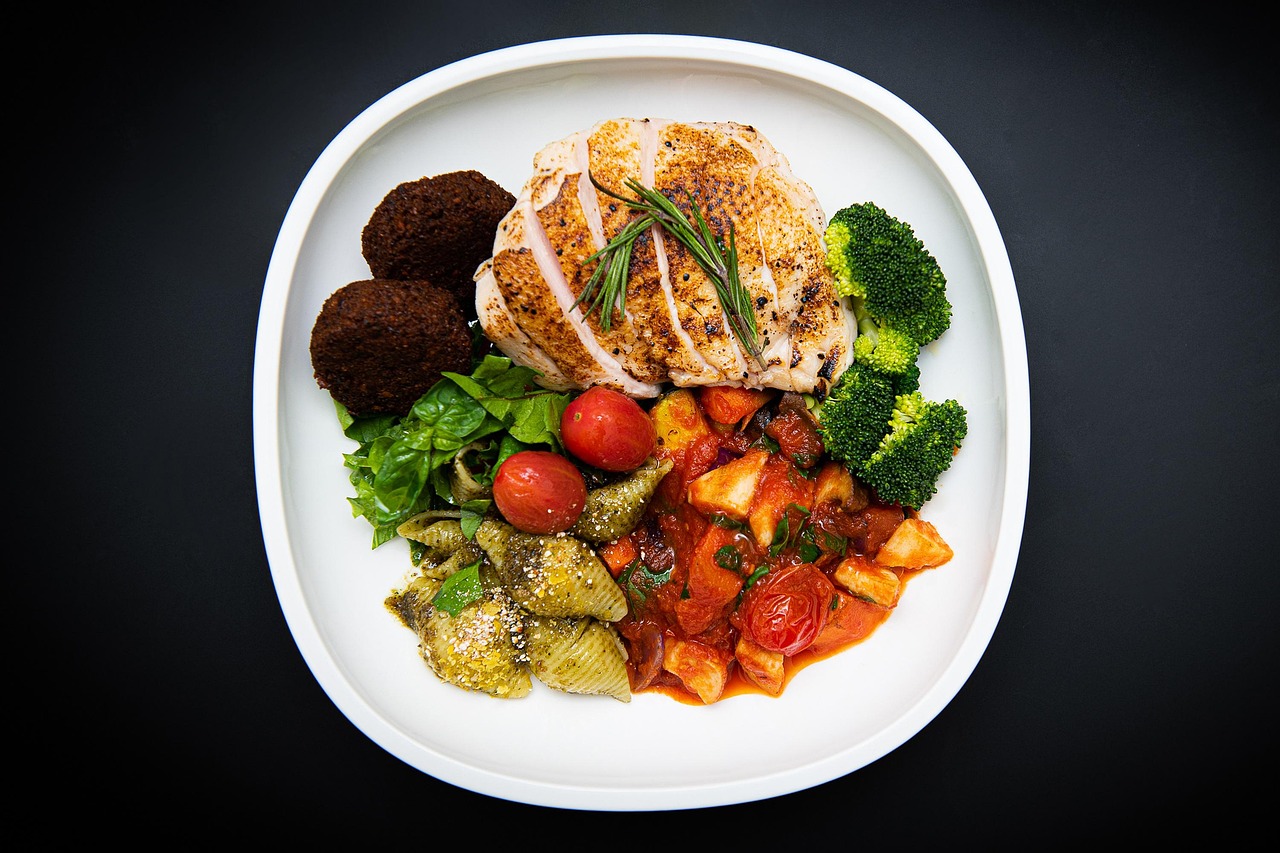
For most people who lift weights, a good daily protein target is about 0.7 to 1 gram per pound of body weight (roughly 1.6 to 2.2 grams per kilogram). Spread it over three or four meals, with about 25 to 40 grams each. You do not need to be perfect, you just need to be consistently in range.
How much protein should I eat per day?
Start with your body weight in pounds and multiply by 0.7 on the low end and 1.0 on the high end. That gives you a range, not a single magic number.
A 150 pound person would aim for roughly 105 to 150 grams a day. A 200 pound person would aim for roughly 140 to 200 grams.
Research generally shows that muscle-building benefits level off somewhere around the upper part of this range. Going far beyond it usually just costs you money and appetite for other foods.
Where should you land in the range?
- Lower end: you are newer to training, eating at maintenance, or finding high protein hard to stick with.
- Higher end: you are lifting hard several times a week, eating in a calorie deficit, or training for something like Hyrox where volume is high.
If you have kidney disease or another medical condition, or you are pregnant, check with your doctor before raising your protein intake.
Why does protein matter more when you are losing fat?
Protein matters more in a deficit because it helps you hold on to muscle while the scale drops. When you eat less overall, your body has less spare energy for recovery, and strength training plus adequate protein is the main signal to keep your muscle.
Protein is also filling. In my experience, people who anchor each meal around a protein source find a deficit far easier to stick with than people who save it all for dinner.
In over 20 years of coaching, the mistake I see most is a protein intake that looks fine on paper but is lopsided: a tiny breakfast, a light lunch, and a huge dinner. Which brings us to distribution.
How should I spread protein across the day?
Aim for 25 to 40 grams of protein at each main meal, rather than cramming most of it into one sitting. Your body can use protein from a big meal, but research generally suggests that spreading it out supports muscle repair at least as well, and it keeps hunger steadier.
A simple template for a 160 pound person aiming for about 130 grams:
- Breakfast: 30 grams
- Lunch: 35 grams
- Snack: 20 grams
- Dinner: 40 grams
That is already around 125 grams without anything exotic. You do not need to hit each meal exactly. Think of it as four chances to get it right, so one missed meal does not sink the day.
What does 30 grams of protein actually look like?
Thirty grams is smaller and simpler than most people think. These are approximate amounts, and labels vary by brand, so check yours:
- 4 to 5 ounces of cooked chicken breast, lean beef, or fish
- 1 cup of cottage cheese or a large serving of plain Greek yogurt, plus a little extra
- 3 to 4 eggs, or 2 eggs plus a few egg whites
- A scoop of whey or a quality plant protein powder
- About half a block of firm tofu, or a cup of lentils plus another protein source
- A can or pouch of tuna, with some on the side
Notice that you can get most of these in a Manhattan deli, a bodega, or a Jersey City grocery store without any planning. Hard-boiled eggs, Greek yogurt cups, rotisserie chicken, and canned fish are all easy picks.
How do I hit my protein target with a busy New York schedule?
Pick two or three default meals for each part of the day and rotate them. Decision fatigue is what derails most protein plans, not lack of knowledge.
Here is what I would try this week:
- Lock in breakfast. Greek yogurt with fruit, eggs with toast, or a shake you can make in 90 seconds. Getting 30 grams before you leave is the easiest win.
- Pack one portable snack for the commute. A protein bar, a shake in a bottle, or jerky holds up well on the subway or the PATH. Check the label for at least 15 to 20 grams.
- Use a “protein first” rule when eating out. Choose the entree or bowl built around chicken, fish, steak, or tofu, and add sides after. This works at almost any restaurant.
- Track for one week only. Use any app to log what you eat. Most people learn their typical intake in about five to seven days, then can eyeball it from there.
- Prep two proteins on Sunday. Cook a tray of chicken thighs and a batch of eggs or lentils. A small apartment kitchen is plenty.
If you take a protein powder, treat it as a convenience, not a requirement. Food comes first, and powder fills gaps.
Frequently asked questions
Is 1 gram of protein per pound of body weight too much?
For most healthy adults who lift weights, 1 gram per pound is on the high end but generally considered safe and not necessary to exceed. Many people build and maintain muscle well with 0.7 to 0.8 grams per pound. If you have kidney problems or another medical condition, ask your doctor what is right for you.
Do I need protein shakes to hit my protein goal?
No. Shakes are a convenient tool, not a requirement, and you can reach your target with regular food. They help most when you are short on time, traveling, or struggling to eat enough at breakfast or after a workout.
What are good high-protein options at a Manhattan deli or bodega?
Look for hard-boiled eggs, Greek yogurt, cottage cheese, rotisserie or grilled chicken, turkey or roast beef sandwiches (go easy on the extras if you are tracking calories), and canned tuna. Pair one of those with fruit or a salad and you have a reasonable meal for around 25 to 40 grams of protein. Check packaged items for the actual number on the label.
Ready to dial in your nutrition?
If you want help turning a protein number into a real weekly routine, I work with clients in Manhattan and Jersey City, and online through the XCD app wherever you are. You are welcome to get in touch and we can talk through where you are and what makes sense next.
Image by merakistudio from Pixabay.